Honda PCX125 (2021-current) - Review & Buying Guide


By Jon Urry
Massively experienced road tester
08.01.2026


£2000-£3500
12.3bhp
133kg
4/5
First introduced in 2010, the PCX125 has been a huge success story for Honda with European sales clocking up over 140,000 units during its lifespan. Originally a pretty basic two-valve motor, the PCX has evolved over the years and after introducing the enhanced Smart Power (eSP) motor in 2010 with idle-stop technology (a European-first for scooters), in 2021 it evolved again. More tech-heavy with HSTC and ABS included as standard alongside a keyless ignition, this generation also boasts an upgraded four-valve engine with enhanced economy figures. If you are after cheap and frugal urban transport with good weather protection and safety assists, the PCX125 (which stands for Personal Comfort with added X-factor by the way) is a hard act to top.
Pros & Cons
Amazing economy
Ease of use
Practicality
It’s best in urban environments only
Lots are used as delivery driver hacks
The shocks are a bit poor quality


Honda PCX125 (2021-current) - Price
Brand new a 2026 PCX125 will set you back £3799, which isn’t a huge amount and can be had on finance for around £69 a month on PCP after a £422.43 deposit or £89 after a £974.44 deposit on HP – both examples are over three years. If you prefer to dip into the used market, the lower end for 2021-2025 models is £2000 in a private sale (unless you take a punt on a crash-damaged bike) with dealers asking closer to £2500. Deals on new bikes are slim with £300 off about the maximum but there are a few pre-registered or low-mileage models out there for close to £3000. Buying new does add the assurance of a warranty (which can be extended up to six years and is transferable) but the PCX is very reliable so this isn’t a huge factor.


Honda PCX125 (2021-current) - Engine & Performance
Originally the PCX came with a two-valve head, however this was upgraded in 2021 to a new four-valve design to help it meet tougher emissions regulations. Known as the enhanced Smart Power Plus engine (eSP+), it is a water-cooled single-cylinder with a SOHC and actually has different dimensions to the old engine (53.5mm x 55.5mm compared to 52.4mmx57.9mm) as well as a higher compression ratio. Power-wise it is also a bit peppier with a claimed 12.3bhp and 8.6lb-ft of torque. Like the old motor, it comes with start/stop technology that cuts the motor after three second of being stationary as well as Honda’s traction control system, HSTC.
Linked to a CVT transmission, there is little to complain about and while far from the fastest bike out there (Honda claim a top speed of 61mph with a cruising speed of 56mph), performance isn’t the PCX’s selling point – economy is!
According to Honda, the PCX can record 134mpg, giving it a tank range of around 240 miles from its 8.1L of fuel. That’s pretty impressive stuff and owners report it does actually get pretty close to these figures with mid-120mpg numbers pretty average.
For buzzing around on an urban commute, there is little to complain about and the motor is also very reliable. Service intervals are every 4000 miles (DIY service kits are just £70) but it is recommended the valve-clearances are checked at every service, which few home DIYers will bother with. A more major service (spark plug replaced) is at 8000-mile intervals (technically the air filter is changed at 12,000 miles but 8000 is a better idea as it is situated low in the bike and collects dirt) with the drive belt changed at 16,000 miles. When buying used, it is worth paying a bit extra to have a bike that has been serviced by a Honda specialist as small capacity models are often horribly abused by their owners... When viewing the bike, take a torch and attempt to take a look behind the fairings to see if there are signs of excessive corrosion. Most owners simply clean the outside of the bike and don’t bother trying to get behind the fairing, which can lead to a lot of rust if the bike is ridden through winter with the exhaust system quite prone to corrosion. Some owners complain about the CVT system becoming a bit jerky, which is cured with new clutch plates and springs for about £70 plus fitment. Overall, however, PCXs tend to run and run and most electrical faults (start/stop not working, failure to start) are down to a duff battery.


Honda PCX125 (2021-current) - Handling & Suspension (inc. Weight)
Honda armed the PCX with a new duplex steel cradle frame in 2021, which is sportier than before but still pleasingly roomy and relaxed. Most riders won’t spot the update and it has to be said, the suspension remains a bit disappointing. Honda cut costs by using non-adjustable telescopic forks on the PCX and also fixed-rate twin shocks. Ok, 2021 saw the shocks gain 10mm of extra travel and stiffer springs to enhance their bump-absorption but that’s not really pushing the boat out, is it? If you want a plush ride quality, the PCX is more workman like than relaxed and it does tend to wallow when ridden spiritedly on B-roads.
When it comes to the brakes, the PCX is again a bit underwhelming. There is a single two-piston sliding caliper at the front but the rear remained a drum brake until 2025, when it became a single-piston caliper. ABS has always been standard fitment.
If you stick to an urban commute, the PCX is easy to manoeuvre through traffic and its brakes are acceptable in their performance but you will never feel the need to rave about them! Used bikes can suffer from sticking calipers, worn pads in the drum and crash damage but generally, like the engine the PCX’s chassis is robust. Ideally, fit ‘known-brand’ tyres as they make the Honda more stable on its fairly small wheels and deliver better wet weather grip than budget examples.


Honda PCX125 (2021-current) - Comfort & Economy
Despite being a 125, the PCX is a very comfortable bike that doesn’t feel too small for taller riders. The fairing is effective and if you stick on a scooter apron (think practicality, not fashion) as well as bar muffs you can happily continue to commute through winter. Storage is also good with 30L of underseat storage (which is enough for a full face lid – just) and also a glovebox with a USB-C socket.
Honda sell an optional top box (35L) which is a common addition and links to the keyless system as well as a taller screen. Both are well worth looking out for.


Honda PCX125 (2021-current) - Equipment
As standard the PCX gets a keyless ignition (check you have two fobs included with the bike) and seat opening, USB-C charge point, HSTC, start/stop and ABS, which isn’t bad when you consider its price tag. In 2025 the higher-spec DX model added a 5in TFT dash with RoadSync smartphone connectivity while the stock version has a more basic LCD display. Watch out for issues with the keyless system and ensure that the seat and fuel cap both open as they can develop faults and the fuel cap can start to rub on the surrounding plastic. The start/stop is known to get a bit confused (there is a fault light thrown up on the dash) so always take the bike for a test ride and check it kicks in. You don’t want a PCX with any electrical issues as they can be a real fight to track down and resolve.
Honda PCX125 (2021-current) - Rivals
Budget scooters are fairly common and if you want to stick with Japanese or Italian brands rather than Chinese, you have a few options.
Yamaha NMAX 125 (2020-current)| Price: £999-£3900


12bhp / 8.3lb-ft
131kg
Suzuki Address 110 (2007-2025) | Price: £1000-£2999

9.3bhp / 6.4lb-ft
97kg
Piaggio Medley 125 (2016-current) | Price: £1500-£3800

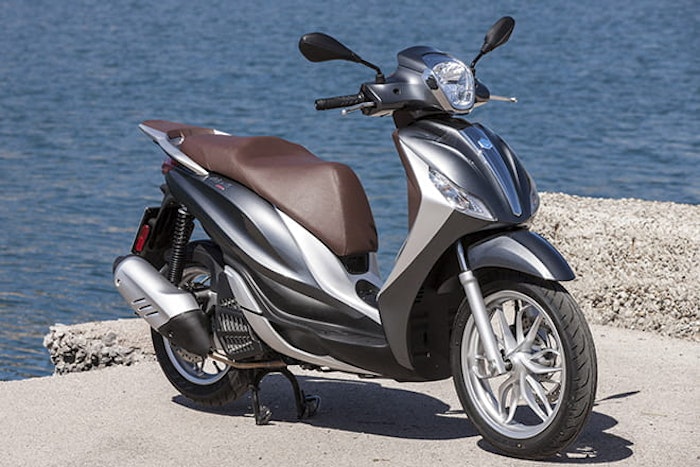
12bhp / 8.5lb-ft
132kg


Honda PCX125 (2021-current)- Verdict
The PCX125 delivers cheap and reliable urban transport with a few nice touches such as keyless ignition, traction control and (on later models) connectivity. When you look at the cost of using public transport, a used PCX makes total sense for short urban commutes or even a hassle-free rural run-about. It’s not flashy but it looks good and will easily return economy figures of over 100mpg, which is incredibly impressive.
If you’d like to chat about this article or anything else biking related, join us and thousands of other riders at the Bennetts BikeSocial Facebook page.
Do you own this bike? Tell us what it’s like, or ask us questions about it at bikeclub.bennetts.co.uk.

Honda PCX125 (2021-current) - Technical Specification
| Original price | £3799 |
| Current price range | £2000-£3500 |
| Capacity | 125cc |
| Bore x Stroke | 53.5mm x 55.5mm |
| Engine layout | eSP single-cylinder |
| Engine details | Liquid-cooled, four-stroke, 4v SOHC |
| Power | 12.3bhp (9.2kW) @ 8750rpm |
| Torque | 8.6lb-ft (11.7Nm) @ 6500rpm |
| Top speed | 61mph (claimed) |
| Transmission | CVT |
| Average fuel consumption | 134mpg |
| Tank size | 8.1litres |
| Max range to empty (theoretical) | 240 miles |
| Reserve capacity | 43 miles |
| Rider aids | ABS, HSTC, start/stop |
| Frame | Tubular steel underbone |
| Front suspension | 31mm telescopic forks |
| Front suspension adjustment | None |
| Rear suspension | Twin shocks |
| Rear suspension adjustment | None |
| Front brake | 1 x 220mm disc, two-piston calipers. ABS |
| Rear brake | 1 x 220mm disc, one-piston caliper. ABS. (drum pre-2025) |
| Front tyre | 110/70-14 |
| Rear tyre | 130/70-13 |
| Rake/Trail | 26.5°/ 80mm |
| Dimensions (LxWxH) | 1935mm x 740mm x 1125mm |
| Wheelbase | 1315mm |
| Ground clearance | 135mm |
| Seat height | 763mm |
| Kerb weight | 133Kg Kerb |

Getting a moped and scooter quote with Bennetts is easy.
We compare prices from our panel of top-tier insurers, to find riders our best price for the cover they need. With common modifications covered as standard, our policies are rated Excellent on Trustpilot and 5 stars by Defaqto. We are an award-winning UK broker, with a UK-based contact centre and 24/7 claims support.
Buy direct or renew at bennetts.co.uk, or via our contact centre, to gain access to a free BikeSocial Membership - unlocking discounts on kit, tyres, training, and exclusive customer-only VIP experiences.


