Ducati Hypermotard V2 (2026) – Technical Review


By Ben Purvis
Motorcycle Journalist
27.01.2026


£13,495 - £17,295
120.4hp
177kg - 180kg
TBC
Just over two decades ago Ducati jumped on the coattails of a brief boom in supermoto interest and unveiled the original Hypermotard concept bike in late 2005. Styled by the brand’s design supremo of the era, Pierre Terblanche, it took that road-tyred motocross ethos and paired it with an air-cooled V-twin and a single-sided swingarm – a combination that should never have worked on paper but turned out to be surprisingly convincing in the metal. Two years later it was in production as the original Hypermotard 1100 and such was its success that Ducati has now taken the idea into its fourth generation for 2026 with the most radical shakeup to the formula yet.
Pros & Cons
Lightest and most powerful Hypermotard yet
Still instantly recognisable despite complete change in construction and engine philosophy
Ducati’s usual level of high-end electronics and rider assist tech
Break from tradition means no more Desmo V-twin
The single-sided swingarm is gone, too

2026 Ducati Hypermotard V2 - Price & PCP Deals
Starting at £13,495 for the base model, the entry point to the Hypermotard V2 range isn’t punitively high – in fact it’s among the most affordable machines in Ducati’s V-twin lineup, with only the Monster and the Scrambler range undercutting it. In contrast, stepping up to the SP version includes a substantial hike to £17,295, which starts to seem a lot for a bike that’s every inch intended to be a plaything.
There’s no choice when it comes to colours – it’s red with black wheels for the base model, silver and grey with red graphics and white wheels for the more flamboyant SP – and the options list lets you increase the out-of-the-door price substantially, with an array of bolt-ons ranging from a £14 brake fluid reservoir sock to a £2k track-only exhaust. Pushing the SP’s price past the £20k mark is all too easy with a few clicks on Ducati’s online configurator tool.

2026 Ducati Hypermotard V2 - Engine & Performance
Perhaps surprisingly, Ducati has never been tempted to slide its most beastly engines into the Hypermotard throughout the model’s life. One can only imagine the behind-closed-doors conversations that surely must have taken place at some stage about a 200hp-plus Hypermotard V4. Instead the bike has always put the focus on minimising weight and pairing that with usable power. As such, while Ducati’s top superbike’s power has risen more than 55% from 140hp for the 999 when the Hypermotard was first shown in 2005 to 218hp for the latest Panigale V4 R, the 2026 Hypermotard V2’s 120.4hp is only 33% more than original Hypermotard 1100 offered.
It's from a much smaller engine, though. Like every V-twin Ducati in 2026 outside the Scrambler range, the Hypermotard V2 adopts Ducati’s new 890cc twin. Simply called ‘V2’, it replaces the 937cc Testastretta 11° of the previous Hypermotard 950, simultaneously bringing a 6.4hp upgrade from that bike’s 114hp.
In case you haven’t been paying attention when the same engine was introduced in the Panigale V2, Streetfighter V2, Multistrada V2 and Monster (and it’s coming to the DesertX in February 2026), the new engine is lighter and more compact than its predecessor. Coming in at 54.4kg, it’s 6.42kg less than the old Testastretta. But it also throws out decade of Ducati tradition, ditching the desmodromic valvetrain system – which uses cam lobes and additional rockers to close the valves as well as open them – in favour of conventional valve springs as used by virtually every other four-stroke bike on the planet. The acceptance of the V2 in other models shows that customers aren’t fussed about that break with tradition: instead they welcome the cheaper servicing and longer service intervals that come with the new motor.
The V2 also includes variable intake valve timing, and for the Hypermotard it’s presented in its most powerful form yet: the same motor puts out 111hp in the Monster, 115.6hp in the Multistrada, and 120hp in the Panigale and Streetfighter – figures that the Hypermotard’s 120.4hp edges out.
The power peak comes at 10,750rpm and the max torque of 94Nm (69.3lb-ft) hits at 8,250rpm, illustrating a big shift from the old 950, which hit max power at just 9,000rpm and had more torque - 70.9lb-ft – at 7,250rpm. More power from a smaller engine always tends to result in a revvier nature, and that’s just what we see here.
As we’ve come to expect from Ducati, the performance is harnessed by a host of rider aids, from the company’s DQS 2.0 up/down quickshifter to cornering traction control enabled by a standard six-axis IMU. There’s wheelie control and engine braking control, too, and there’s an endless level of tweaking available via the four adjustable riding modes – Race, Sport, Road and Wet – each providing different settings for the engine mapping and the rider assists.

2026 Ducati Hypermotard V2 - Handling & Suspension (inc. Weight)
The engine isn’t the only break with tradition because after two decades of steel trellis-framed Hypermotards the 2026 model takes a different route – aligning with its siblings by adopting an aluminium monocoque chassis.
As on the other bikes with the V2 engine, the motor is a structural component. It hangs beneath a cast aluminium half-frame that doubles as the engine’s airbox and provides a mount for the steering stem, while the swingarm attaches to the rear of the engine. There’s a nod to Ducati’s trellis heritage in the seat subframe, which retains that construction, but the company again departs from its history by using a double-sided swingarm – similar in concept to the design used on the latest Panigale V4 – instead of the old single-sider.
In the Hypermotard, the chassis construction is claimed to be even more rigid than the similar setup used by the Panigale V2 and Streetfighter V2, offering increased torsional and lateral stiffness.
Turning to the suspension and brakes, we start to see where the base Hypermotard V2 and the more expensive SP drift apart. The cheaper model gets fully-adjustable Kayaba 46mm forks and a preload-and-rebound adjustable shock from the same brand, while the SP turns to Ohlins’ range for its 48mm NIX30 forks and STX46 shock, both fully adjustable. On both bikes there’s a Sachs steering damper.
The wheels also differ, with the base model using cast alloys – both 17 inches in diameter – wrapped in Pirelli Diablo Rosso IV rubber. The SP, meanwhile, gets lighter forged alloys of the same size, saving 1.56kg and cutting the moment of inertia by 27% at the front and 21% at the rear. Stickier Pirelli Diablo Rosso IV Corsa rubber is also fitted as standard.
It’s a similar story with the brakes, with both model using Brembo kit, but the components differing to reflect their position in the range and pricing. The standard Hypermotard V2 uses M4.32 monobloc calipers and a PR18/19 master cylinder, while the V2 SP gets M50 monoblocs, each 140g lighter than the M4.32s, and a PR16/21 master cylinder. The disc sizes are the same on both: 320mm at the front, 245mm at the rear. The six-axis IMU means there’s cornering ABS as standard, with four selectable levels of intervention that are paired to the chosen riding mode.
When it comes to weight, the standard model comes in at 180kg without fuel, while the SP measures 177kg in the same state.


2026 Ducati Hypermotard V2 - Comfort & Economy
Supermotos aren’t known for their comfort, but Ducati has paid attention to getting the ergonomics of the new Hypermotard V2 right.
While the styling of the latest model takes a conscious step back towards the look of the original 2005 concept bike and the first-generation Hypermotard 1100 – with a near-identical shape to the headlight, side cowls and front ‘beak’ – there’s a much greater focus on making it easy to use.
The seat is narrow, so despite sitting high at 880mm (there’s an 865mm ‘low’ option, too, which can be dropped further to 850mm with a suspension lowering kit), it’s not too hard to reach the ground. The tank sides are textured to increase knee grip, and compared to the old 950 model, the new bike’s pegs and bars are further forward, helping push weight to the front and give a convincing supermotard riding position, while the seat is 10mm lower.
Fuel economy for both versions is quoted at 52.3mpg, although at 12.5 litres the tank is fairly small so don’t expect to go huge distances without fuel stops. In theory the maximum is 143 miles from brimmed to dry, so in the real world you’re likely to be filling up every 100 miles or so if you don’t want to gamble with getting stranded.
Wide service intervals – 9000 miles/24 months between oil changes and 28,000 miles between valve clearance checks – will be appreciated, and mark a significant step forward compared to Ducati’s older generation of Desmo twins with their regular cambelt changes and valve checks.

2026 Ducati Hypermotard V2 - Equipment
A new 5-inch TFT display faces the rider once aboard the 2026 Hypermotard V2, controlled by a ‘petal’ joystick on redesigned bar controls. Compared to the previous model, the new dash shifts the warning lights to the main display, apart from the overrev warning lamp which stays separate. It comes on at the redline and there’s little reason to illuminate it – the rev counter and gear indicator flash green to tell you when to shift up, and turn red before you reach the rev limiter. During running-in, the rev counter turns orange if you go beyond the recommended break-in revs.
The new screen has three visual modes – Road, Road Pro and Track – to change the information being displayed. Road offers the usual mix of RPM, speed, gear position and riding mode info, plus time, engine temperature and air temperature. Road Pro adds readouts for the percentage of power and torque being used, while Track puts the emphasis on the rev counter and gear indicator, plus info from the optional Lap Timer Pro that gives lap times, splits and more if fitted.
There’s Bluetooth (of course) for music and calls, and you can add turn-by-turn navigation as an extra-cost option.
For convenience there’s a ‘coming home’ function for the headlight, keeping it on for 30 seconds after you turn the bike off, and the Ducati Brake Light EVO system that flashes the rear light if you brake harder above 34mph, and can turn on the hazards automatically if it senses an emergency stop scenario. ‘Race’ riding mode disables the feature, as it expects you to be braking hard on track.
2026 Ducati Hypermotard V2 - Rivals
Given that Ducati has seen fit to keep the Hypermotard on its books for two decades, and even expanded the range with the single-cylinder Hypermotard Mono, there are surprisingly few direct competitors from other brands. You can get single-cylinder machines like the closely-related KTM 690 SMC-R, GasGas SM700 and Husqvarna 701 Supermoto – all based on the same KTM engine and chassis – but they don’t have the Hypermotard’s brawn or twin-cylinder appeal. Multi-cylinder rivals like MV Agusta’s Rivale and Aprilia’s Dorsoduro have been discontinued, leaving the Hypermotard V2 up against more conventionally-shaped, track-oriented naked bikes rather than supermoto-style machines. Consider these:
KTM 990 Duke R (2026) | Price: £12,499


128.2bhp/59lb-ft
188kg
Triumph Street Triple 765 RX (2026) | Price: £12,895
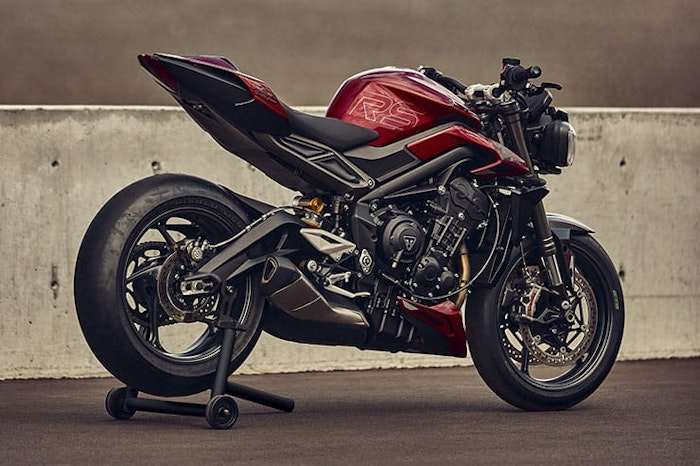
128.2bhp/59lb-ft
188kg
Yamaha MT-09 SP | Price: £11,610
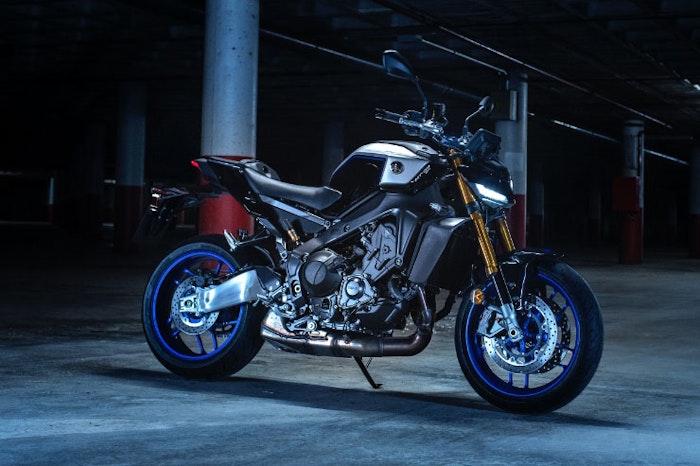
117.4bhp/68.6lb-ft
194kg

2026 Ducati Hypermotard V2 - Verdict
Every indication suggests the 2026 Hypermotard V2 will be the most impressive machine yet to carry the name. Lighter and more powerful than its V-twin predecessors, it promises to be a better machine both on the road and on the track.
Supermotos remain a niche offering, and the fact that rivals have largely left Ducati to this segment of the market reflects that. Ducati could have opted, as a result, to let the old Hypermotard soldier on, unchallenged in its particular segment, but the fact it chose instead to invest in a completely new model suggests it’s belief in the Hypermotard is unwavering and that after celebrating its 20th anniversary there’s no reason to believe it won’t also hit its 30th, 40th and more in the future.
If you’d like to chat about this article or anything else biking related, join us and thousands of other riders at the Bennetts BikeSocial Facebook page.
Do you own this bike? Tell us what it’s like, or ask us questions about it at bikeclub.bennetts.co.uk.

2026 Ducati Hypermotard V2 - Technical Specification
| New price | From £13,495 (V2), £17,295 (V2 SP) |
| Capacity | 890cc |
| Bore x Stroke | 96 x 61.5mm |
| Engine layout | 90-degree V-twin |
| Engine details | 4 valves per cylinder, liquid cooled, variable intake valve timing, chain driven DOHC |
| Power | 120.4bhp (88.5kW) @ 10,750rpm |
| Torque | 69.3lb-ft (94Nm) @ 8,250rpm |
| Transmission | 6 speed, chain final drive, DQS 2.0 up/down quickshifter, slip/assist clutch |
| Average fuel consumption | 52.3mpg claimed |
| Tank size | 12.5 litres |
| Max range to empty | 143 miles |
| Rider aids | Six-axis IMU, cornering ABS, cornering traction control, wheelie control, engine brake control, power modes |
| Frame | Aluminium monocoque half frame, structural engine |
| Front suspension | Kayaba 46mm USD forks (SP: Ohlins NIX30 48mm USD forks) |
| Front suspension adjustment | Fully adjustable |
| Rear suspension | Kayaba monoshock (SP: Ohlins STX46 monoshock) |
| Rear suspension adjustment | Preload and rebound (SP: fully adjustable) |
| Front brake | 2 x 320mm discs, Brembo M4.32 radial four-piston calipers (SP: Brembo M50 radial four-piston calipers) |
| Rear brake | 245mm disc, two-piston caliper |
| Front wheel / tyre | Cast alloy wheel, 120/70-ZR17 Pirelli Diablo Rosso IV (SP: forged alloy wheel, Pirelli Diablo Rosso IV Corsa) |
| Rear wheel / tyre | Cast alloy wheel, 190/55-ZR17 Pirelli Diablo Rosso IV (SP: forged alloy wheel, Pirelli Diablo Rosso IV Corsa) |
| Dimensions (LxWxH) | TBC |
| Wheelbase | 1514 mm |
| Seat height | 880mm (865mm with low seat, 850mm with low seat and low suspension kit) |
| Weight | 180kg (kerb) (SP: 177kg) |
| Warranty | 24 months, unlimited miles |
| Servicing | Annual check. Oil service 9000 miles/24 months. Valve adjustment 28,000 miles. |
| MCIA Secured Rating | Not yet rated |
| Website | www.ducati.com |

What is MCIA Secured?
MCIA Secured gives bike buyers the chance to see just how much work a manufacturer has put into making their new investment as resistant to theft as possible.
As we all know, the more security you use, the less chance there is of your bike being stolen. In fact, based on research by Bennetts, using a disc lock makes your machine three times less likely to be stolen, while heavy duty kit can make it less likely to be stolen than a car. For reviews of the best security products, click here.
MCIA Secured gives motorcycles a rating out of five stars (three stars for bikes of 125cc or less), based on the following being fitted to a new bike as standard:
A steering lock that meets the UNECE 62 standard
An ignition immobiliser system
A vehicle marking system
An alarm system
A vehicle tracking system with subscription
The higher the star rating, the better the security, so always ask your dealer what rating your bike has and compare it to other machines on your shortlist.

Getting a motorcycle insurance quote with Bennetts is easy.
We compare prices from our panel of top-tier insurers, to find riders our best price for the cover they need. With common modifications covered as standard, our policies are rated Excellent on Trustpilot and 5 stars by Defaqto. We are an award-winning UK broker, with a UK-based contact centre and 24/7 claims support.
Buy direct or renew at bennetts.co.uk, or via our contact centre, to gain access to a free BikeSocial Membership - unlocking discounts on kit, tyres, training, and exclusive customer-only VIP experiences.


