Triumph Trident 800 (2026) – Review


By Grace Webb
Freelance Journalist & Presenter
03.02.2026


£9195
113bhp
198
5/5
Technical Review: Ben Purvis (Oct 2025)
Riding Impressions: Grace Webb (Feb 2026)
Way back in 2007 Triumph took the simple step of stripping the fairing off its then-current Daytona 675 and slapping on some straight bars to create a machine that’s the poster child for the saying ‘more than the sum of its parts’ – the Street Triple. The new Trident 800 looks set to repeat that trick, using components largely borrowed from existing models to create a surprisingly appealing package that should have some mainstream rivals very worried indeed.
Triumph knows a thing or three about developing triples, and for 2026 it released the Trident 800 - a brand-new, middleweight naked that adds another model to its roadster line-up. The original Trident was introduced in 1968, and over the years it’s created a bloodline of triple-powered Triumphs. It’s evolved over time, and the Trident name continues today in 660 form and now this 800 version. However, the nature of this new Trident copies a lot of homework from its sporty Street Triple sibling, making this 800 a brilliant fusion between the Trident 660 and Street Triple 765. The Trident 800 means you can now have a heavy helping of high-end performance but with a more comfortable road-biased position.
Steve Sargent, Chief Product Officer at Triumph Motorcycles says, “The middleweight roadster segment is becoming much broader. At one end of that spectrum, we’ve got what we would consider to be a lot of people’s first big, fun bike in the Trident 660, and at the other end we have the Street Triple 765, which is considered to be an absolute track weapon. A gap has emerged, which gives us huge potential to offer the rider something new in what is a really popular subsection of that roadster market. The customer we imagine wants a bike that’s got some attitude, they want excitement, they want enough power with useable ergonomics, nothing too extreme, just a nice, spacious, natural riding position with good visibility and comfort, whilst still having serious fun on every single ride”.
Is it a load of hype for nothing or is it actually the hybrid we all wanted? Grace sampled the scenery of Cyprus on the international press launch of the Trident 800 to find out more.
Pros & Cons
789cc triple from the Tiger Sport 800 gives huge performance increase over Trident 660
Updated chassis and fully adjustable suspension
A price tag of under £10k.
Easier town riding thanks to the lower seat height than the Street Triple.
Triumph shift assist, Bluetooth connectivity, lean-sensitive rider aids and cruise control all as standard.
Does not have a full colour dash, as seen on some of its rivals.
The looks are derived from the Trident 660 so gives more of a retro look, which may be a downside if you prefer the sportiness of the Street Triple’s styling.
‘Sport’ mode could be snatchy if you’re not riding ‘progressively’.
Triumph Trident 800 reviewed in 3 minutes

Watch our concise review video...


2026 Triumph Trident 800 - Price & PCP Deals
Listing at £9,195 when it hits dealers in March 2026, the Trident 800 carries a premium over the 2026 Trident 660 at £8,095 but one that’s more than reasonable given the hugely increased power, better suspension, brakes and uprated technology.
The Street Triple R has now ceased production, leaving only 40 units left in the UK for customers to buy (correct at time of publishing). Once they’re gone, they’re gone. This leaves the Street Triple RS and RX as the far sportier middleweight roadsters which start from £11,995.
With the Street Triple R now removed from the line-up, it’s left Triumph with more defined options for riders, rather than having to weigh up choices that have similar price tags.
Triumph is banking on the Trident 800’s more relaxed attitude, giving it a broader appeal, putting it into the same realm as the Yamaha MT-09 – which costs around £1000 more – and Kawasaki Z900.
Expect bikes in dealerships in March but Triumph has already opened an online reservation system that lets you configure the Trident 800 and put down a deposit to be among the first to get the bikes when production is up to speed.
The OTR price includes the Jet Black colour scheme as standard, but riders have the choice of Ash Grey or Carnival Red for £150 more, though all three colour options are paired with gold alloy wheels.
A tasty optional extra that riders may be interested in is the offering of an Akrapovic exhaust silencer for £777.66, which is still extraordinary to think that even with a high-end exhaust added, this bike could still be yours for under 10 grand.
The bike on test was completely standard, with the only optional extras being the additional Ash Grey paint work as well as a set of heated grips for the January weather, which come in at £245; bringing the total of our test bike to £9,590.
Sample PCP deal (Jan 2026):

2026 Triumph Trident 800 - Engine & Performance
The 798cc three-cylinder engine in the Trident 800 is far more than just a bored-out version of the engine from the smaller Trident 660, and in fact comes from the Tiger Sport 800 that was launched a year ago.
That means it’s also significantly different to the 765cc Street Triple motor, despite sharing the same general layout, bore and a similar capacity.
The 798cc total comes from a 78mm bore, like the Street Triple and 4mm larger than the Trident 660’s, paired to a 55.7mm stroke that’s 4.6mm longer than the Trident 660’s and 2.3mm longer than the Street Triple’s. Added to a 13.2:1 compression ratio that’s significantly higher than the 660’s 11.95:1, with a trio of throttle bodies instead of the Trident 660’s single unit, the result is a peak of 113hp at 10,750rpm, with 62lb-ft of torque at 8,500rpm. That’s a power increase of around 40% over the 81hp Trident 660, as well as a 31% boost in torque.
Unsurprisingly, the internal changes also mean there’s a new crankshaft, camshafts, conrods, pistons and even a new balancer shaft.
Riding Impressions
When you swing a leg over the Trident 800, it definitely has the presence of something with substance and that also translates with the engine. Triumph is renowned for its triples and I can confirm that even a minute twist of the throttle offers a familiar soundtrack of that wonderful induction roar through the triple throttle bodies. The airbox and intake trumpet system has been redesigned to not only optimise the airflow but also to create an even more sumptuous induction growl, followed by a few pops on the overrun.
Although Triumph brought across the Tiger Sport 800 engine into this bike, it’s been tuned and mapped in a way to suit the roadster chassis. So, when I delved into the different riding modes as the Cypriot weather evolved, I could genuinely tell how the attitude of the bike changed and how the performance was being delivered, all while retaining its composure. In a way, I almost preferred riding in ‘Rain’ mode as I could feel the effects on the chassis in a way that gave so much confidence as it hummed and grounded itself across plenty of wet, shaley surfaces. It was refreshing to see that ‘Rain’ mode didn’t limit the power in order to suit the surface; Triumph has developed a sophisticated map to the engine that gives a real established sensation to the delivery.
As the conditions dried, ‘Road’ mode controlled the throttle response well, giving a positive and progressive quality, harnessed by more intrusive traction control. And if you’re feeling frisky then ‘Sport’ mode definitely sharpens the throttle. At times when riding through smaller villages and speed was low, I found ‘Sport’ mode to be a little snatchy, in a way telling me to get a move on - so choose wisely where you use it. As it’s on three throttle bodies, compared to the single found in the Trident 660, there’s a much crisper response in all the modes, bringing about a completely different feel over the 660.
First gear is also much taller which I noticed made pulling away from the plentiful junctions which gave a nice, positive experience, and then winding the throttle on gives a good surge of torque and as you reach the mid-range of revs. The triple really starts to howl and powers along beautifully. The press launch route included a lot of sub 4th gear corners, which really demonstrated how good the low-to-mid torque from the engine was throughout the lower gears. The Trident 800 is a real step up in power delivery compared to the 660 and the sportier DNA from the family is clearly evident.


2026 Triumph Trident 800 - Handling & Suspension (inc. Weight)
The basics of the Trident 800’s chassis – a tubular steel perimeter frame, Showa 41mm forks and a Showa monoshock – might read like they’re straight from the Trident 660’s spec sheet, but the reality is that they’re all significantly different.
The frame itself comes not from the Trident 660 but from the Tiger Sport 800, as the main tubes are set further apart to clear the wider, three-throttle arrangement of the 798cc triple instead of the smaller bike’s single throttle.
The forks might be 41mm Showa SFF-BP units, like the Trident 660’s, but for the 800 they’re given adjustable compression and rebound damping, while the Showa monoshock at the back is upgraded to have adjustable rebound and preload instead of the preload-only adjustment of the 660.
With those changes come a tweak to the geometry, with a slightly steeper 24.5-degree head angle instead of the 660’s 24.6 degrees, and fractionally more trail (108mm instead of 107mm). The seat is 5mm higher at 810mm and restyled to be a two-piece design with revised bodywork around the rear, while the addition of an exhaust end can on the right-hand side instead of the 660’s underbelly setup, plus a new belly pan around the front section of the pipe, means the 800 is easily identified.
Uprated brakes come in the form of 4-piston radial calipers instead of the 660’s axial Nissin two-pots, and while the rear remains a single-piston sliding caliper, the 800 gets an inertial measurement unit for cornering ABS and traction control.
Riding Impressions
The Trident 800’s chassis has been built to reflect the more aggressive style and performance, as well as to allow for the triple throttle bodies that are now wider compared to the single on the 660, so the geometry is very different. The 660 is a really agile bike with a good front end feel – almost like a pitbike – and what impressed me with the Trident 800 is that this machine has retained that agility even after the heavy upgrades. Over the 660, it has a slightly stiffer spring and a bit more rear damping, but the adjustability means you can back that off if you want a bit more comfort. At the front, the spring rate is the same as the 660 but the damping is higher. Again, it’s adjustable. So, if you like having the option to adjust, then a big reason to look at the 800 over the 660 is that you can dial it in a lot more to tailor the 800 to your ride, thanks to the all-round Showa suspension. But for many riders, they’re looking for a great handling bike straight out the box, and that’s what you’re going to get with the Trident 800. The stiffer spring certainly gives it an athletic attitude, similar to its Street Triple sibling, but don’t go thinking that it makes for a rigid road ride, as it’s soft and compliant in places that it needs to be. Through the Cypriot mountains, there were few roads that were freshly paved so I certainly tried out a pothole or two and the Trident 800 took poor road surfaces in its stride, handling some cracked roads really well. The flickability paired with the torquey triple engine really made this a delight to ride. With a wet weight of 198kg, it’s at the lighter end in its category, a feature that plays into its sprightliness; tight hairpins, mini-roundabouts or parking spaces I found were easily handled.
The only place I found the Trident 800 to be not in its happy place, was on the motorway. Around the 70mph mark it does become a bit moany and blowy, despite the sporty fly screen. However there’s no issues with its overtaking abilities. It’s not the end of the world, but may become a bit uncomfortable on a long trek.
To keep speed under control, the Triumph branded 4-piston brakes were very confidence inspiring, I was impressed with the stopping power and felt they matched the machine nicely by having more bite to them over the 2-piston sliding calipers seen on the Trident 660.
Finally, I need to give a shout out to the tyres; Triumph opted for the Michelin Road 6 rubber and for the changeable conditions at the press launch, they were absolutely fantastic. The new tread pattern that features on these hoops really supported the wet weather riding but also came into their own during the patches of dry. A really great choice for this machine.


2026 Triumph Trident 800 - Comfort & Economy
Comfort, economy and accessibility are where the Trident 800 starts to put some clear air between itself and the Street Triple 765 in Triumph’s range. The 810mm seat might be 5mm higher than the Trident 660’s, but it’s 26mm lower than the Street Triple’s, and the bars are wider and higher while the pegs are lower, giving a more relaxed riding position overall.
A small flyscreen, absent from the Trident 660, helps deflect air over the rider, and while the fuel tank, at 14 litres, is smaller than the Street Triple’s 15-litre unit, the Trident 800 manages significantly better fuel economy, 60.1mpg against 52.8mpg, so its overall range – 185 miles from a full tank – is longer than the Street Triple’s 173-miles.
Riding Impressions
I was pleasantly surprised after the 90-mile ride that the dash read 55mpg, which isn’t far off Triumph’s claimed figure of 60mpg. My ride had plenty of steady wet riding involved, which may have influenced the figure and I’m sure this number would drop if you did the same distance of twisty road on a dry, sunny morning but nonetheless, I was still impressed with my findings.
For me as a 5’4” rider and a 28” inside leg measurement, I find a lot of seat heights to be on the tall side and with the Trident 800 being at 810mm, meant I’m on my tip toes once again. Having said that, it does have a nice narrow stand-over width, very similar to the Trident 660 and so it’s more than fine to shift to one side to get a whole foot on the ground, stopping at traffic lights was perfectly alright thanks to its beautifully balanced stance, and the 198kg weight makes moving it around off the bike not so intimidating.
Like the Trident 660 and Street Triple 765, the Trident 800 also has the option of a pillion seat which all fits neatly into the design of the bike. However, your pillion is likely to be off the back if Triumph’s odd choice of marketing material is anything to go by with wheelies and stoppies galore! We’ll report back another time on the comfort of those…


2026 Triumph Trident 800 - Equipment
As we’ve all come to expect in the mid-2020s, the Trident 800 gets a selection of rider modes, riding assist technologies and connectivity possibilities as standard. These start with a trio of riding modes, Road, Sport and Rain, each tweaking the throttle map and traction control presets.
Less common in this class is the addition of an IMU, something Triumph is adopting widely across its 2026 range, to enable cornering, lean-sensitive traction control and ABS. You also get help with your gearshifts thanks to a standard-fit up-and-down quickshifter, while cruise control takes the strain during long, constant-speed runs.
The My Triumph Bluetooth system pairs your smartphone to the bike’s 3.5-inch, circular TFT screen and control on the left-hand bar for navigation, music and calls.
And of course there’s an array of extra-cost options on offer, including a titanium and carbon Akrapovic exhaust silencer, slim LED indicators and bar-end mirrors.
Riding Impressions
As mentioned, the choice and delivery of the rider modes is brilliant and it’s nice to see that the Trident 800 comes with three modes as standard. The Trident 660 has only recently been updated with a Sport mode (not included on any pre-2025 models) and as expected with its sporty nature, the Street Triple 765 also has a Rider Configurable mode – just to set the scene in the line-up.
The rider modes, as well as the My Triumph Bluetooth connectivity package is all displayed via the clean, unfussy, circular TFT dash. The same dash as the Trident 660, which in its simplicity is really easy to use. There’s not an overwhelming number of buttons and everything is accessible with a few clicks and you’re able to change rider modes on the move by clicking and shutting the throttle. If you forget to do that, a message displays on the screen reminding you so it’s all dead easy to use. The same with the accessory heated grips on my test bike, they have their own button so with one click, they’re on, without having to search within a million menus.
Triumph’s shift assist comes as standard, meaning you can go up and down the gearbox without using the clutch, a must-have on modern bikes these days. It’s pretty fluid, I had no issues using it and most importantly, it let me concentrate on the ride without fussing with the left lever.
Cruise control as standard is also a nice touch, especially when you think something like the Honda CB1000 Hornet doesn’t have cruise control or lean-sensitive rider aids but sits at a very similar price point. It’s great to see Triumph continue to introduce an IMU to their new range of bikes as this sophisticated tech works so well keeping the ride seamless and smooth. My ride was getting quite greasy at times, and the traction control did kick in once or twice but in a way that was tamed and orderly. It did its job and I moved on, which gave me a lot of confidence on the wet mountain roads. There is the option of turning off the traction control if you did want to try out those marketing wheelies….
2026 Triumph Trident 800 - Rivals
Triumph makes no bones about the fact it’s targeting two key rivals with the Trident 800: the Yamaha MT-09 and Kawasaki Z900 – bikes that come very close in terms of performance and specs, right down to the IMU-based rider aids. But inevitably customers are also likely to compare it with the company’s own Street Triple when faced with both options in the same showroom, as they have similar performance, price and specs.
Yamaha MT-09 - Yamaha’s own take on the three-cylinder naked streetbike packs a little more power than the Trident 800 as well as a tad more torque, thanks to 92cc more capacity, but it’s also about £1k more expensive and has sci-fi styling that won’t appeal to everyone. Triumph doesn’t have anything to match the Yamaha’s optional Y-AMT semi-auto transmission, though.
Kawasaki Z900 - Priced within a pint of the Trident 800, the Z900 noses ahead when it comes to power and torque with its 948cc four-cylinder engine. But it’s a tad heavier and again suffers from overwrought styling that would look right at home in a Transformers movie.
KTM 990 Duke - Priced a little more competitively in 2026 than when the revamped model first appeared in 2024, the KTM provides a more top-end power and torque than the Triumph but the triple is likely to offer more breadth across the whole rev range. Then again, the Austrian entry carries an extra 149cc.
Yamaha MT-09| Price: £10,110

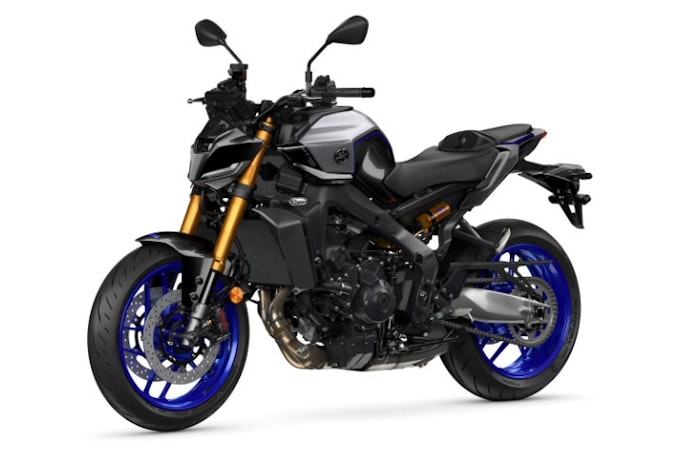
117bhp / 68.6lb-ft
193kg
Kawasaki Z900 | Price: £9,199

122bhp / 71.8lb-ft
213kg
KTM 990 Duke | Price: £10,999
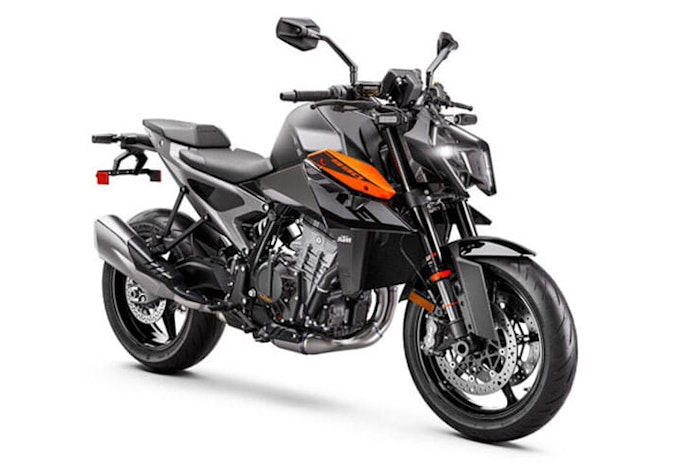
121bhp / 76lb-ft
190kg

2026 Triumph Trident 800 - Verdict
Triumph has carefully considered which features to include from the Trident 660 and Street Triple 765 in its Trident 800 ‘pick n mix’, to create a characterful and useable middleweight. From my press launch riding experience the selections have resulted in Triumph producing a roadster with the ultimate combination; the performance of a big bike with the agility of a smaller bike. And that’s a bit tasty.
Not only that but the price tag makes it even more tempting as Triumph have considered a very competitive cost. There’s even a bit of wiggle room to add some optional extras while still keeping it under the magic £10k mark. When thinking of any cons for this bike, I’m having to be very nit-picky because this is very much a well performing bike straight off the shop floor.
While the 660 is a good all-rounder, the 800 is a bit livelier, a bit sexier and has more serious performance, taking nuggets of inspiration from the Street Triple 765 which is all about top-end power and more inclined towards track riding. There’s less focus on lap times here and more about real-world performance, so Triumph has mapped a cracking engine along with brilliant handling but served it with a healthy dollop of road comfort.
For me, I came away thinking that this is a bike that’s not just capable in the right hands, but one that most people can ride and get the best out of the machine.
If you’d like to chat about this article or anything else biking related, join us and thousands of other riders at the Bennetts BikeSocial Facebook page.
Do you own this bike? Tell us what it’s like, or ask us questions about it at bikeclub.bennetts.co.uk.


2026 Triumph Trident 800 - Technical Specification
| New price | From £9195 |
| Capacity | 798cc |
| Bore x Stroke | 78 x 55.7mm |
| Engine layout | Inline triple |
| Engine details | Liquid-cooled, 12 valves, DOHC |
| Power | 113bhp (84.6kW) @ 10,750rpm |
| Torque | 62lb-ft (84Nm) @ 8,500rpm |
| Transmission | 6 speed, chain final drive, up/down quickshifter |
| Average fuel consumption | 60.1 mpg claimed |
| Tank size | 14 litres |
| Max range to empty | 185 miles |
| Rider aids | Cornering traction control, cornering ABS, three riding modes |
| Frame | Tubular steel perimeter |
| Front suspension | Showa 41mm upside down separate function big piston (SFF-BP) forks, 120mm wheel travel |
| Front suspension adjustment | Adjustable compression and rebound damping |
| Rear suspension | Showa monoshock RSU, 130mm wheel travel |
| Rear suspension adjustment | Adjustable preload and rebound damping |
| Front brake | Twin Ø310mm floating discs, 4-piston radial calipers, OCABS |
| Rear brake | Single Ø220mm fixed disc, single piston sliding caliper, OCABS |
| Front wheel / tyre | Cast aluminium alloy 5 spoke, 17 x 3.5 in |
| Rear wheel / tyre | Cast aluminium alloy 5 spoke, 17 x 5.5 in |
| Dimensions (LxWxH) | 2024mm x 815mm x 1088mm |
| Wheelbase | 1402mm |
| Seat height | 810mm |
| Weight | 198kg (wet) |
| Warranty | 2 years |
| Servicing | 10,000 miles (16,000km)/12 months |
| MCIA Secured Rating | Not yet rated |
| Website | www.triumphmotorcycles.co.uk |

What is MCIA Secured?
MCIA Secured gives bike buyers the chance to see just how much work a manufacturer has put into making their new investment as resistant to theft as possible.
As we all know, the more security you use, the less chance there is of your bike being stolen. In fact, based on research by Bennetts, using a disc lock makes your machine three times less likely to be stolen, while heavy duty kit can make it less likely to be stolen than a car. For reviews of the best security products, click here.
MCIA Secured gives motorcycles a rating out of five stars (three stars for bikes of 125cc or less), based on the following being fitted to a new bike as standard:
A steering lock that meets the UNECE 62 standard
An ignition immobiliser system
A vehicle marking system
An alarm system
A vehicle tracking system with subscription
The higher the star rating, the better the security, so always ask your dealer what rating your bike has and compare it to other machines on your shortlist.

Getting a motorcycle insurance quote with Bennetts is easy.
We compare prices from our panel of top-tier insurers, to find riders our best price for the cover they need. With common modifications covered as standard, our policies are rated Excellent on Trustpilot and 5 stars by Defaqto. We are an award-winning UK broker, with a UK-based contact centre and 24/7 claims support.
Buy direct or renew at bennetts.co.uk, or via our contact centre, to gain access to a free BikeSocial Membership - unlocking discounts on kit, tyres, training, and exclusive customer-only VIP experiences.


